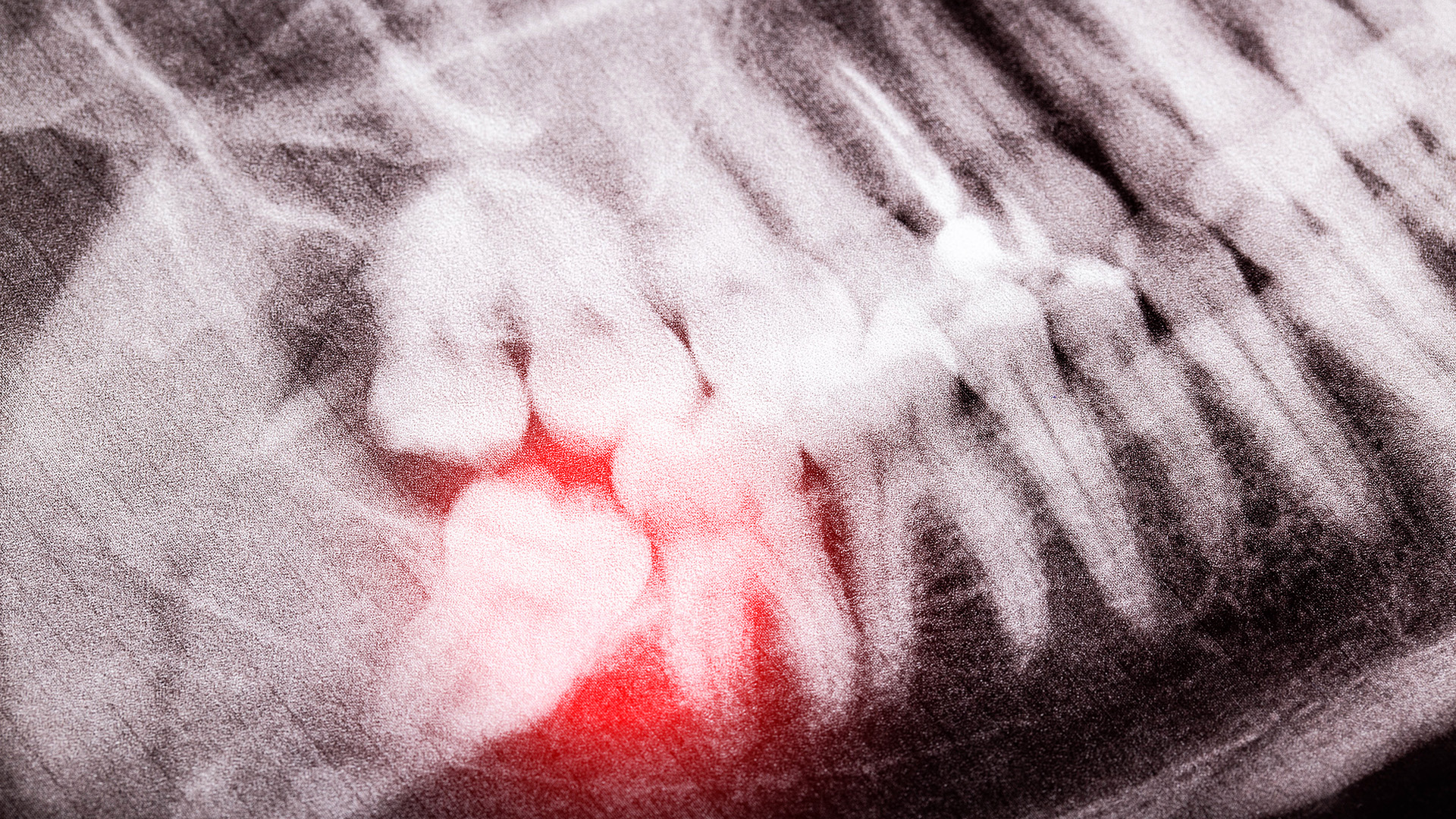
Impacted wisdom teeth are common in teens and young adults and often raise important questions when braces are planned. Do they always need to come out? Does timing matter? The answer depends on your individual situation. We evaluate your wisdom teeth as part of your overall plan and collaborate with trusted oral surgeons to choose the safest, most efficient way to achieve a healthy, stable smile. Many patients specifically ask whether impacted wisdom teeth need to be removed for braces, how wisdom teeth and orthodontics interact, and whether they can put braces on wisdom teeth. The guidance below explains how decisions are made.
What Are Impacted Wisdom Teeth?
Wisdom teeth, also called third molars, are the last adult teeth to develop and typically try to erupt between ages 17 and 25. If there is not enough space or the teeth are angled poorly, a wisdom tooth can become impacted, trapped beneath the gum or bone and unable to emerge normally.
Types of impaction include horizontal impaction (the tooth lies sideways), angular impaction (tilted forward or backward), soft-tissue impaction (the crown is covered by gum), and partial impaction (only part of the crown shows, creating a trap for bacteria). These patterns are identified on exams and imaging and help guide treatment decisions involving wisdom teeth and orthodontics.
Signs and symptoms can include pain near the back of the jaw, swelling, bad breath or a bad taste, red or tender gums, and repeated infection around a partially erupted tooth (pericoronitis). Less commonly, cysts or damage to the neighboring second molar can occur. Some impacted teeth cause no symptoms and are found on routine X-rays.
How Impacted Wisdom Teeth Can Affect Orthodontic Treatment
Impacted third molars can influence braces in several ways. In some people, they may place pressure on the surrounding bone and back molars, potentially contributing to crowding over time. While research indicates wisdom teeth are not the sole cause of shifting, they can be a factor in certain cases, particularly when inflammation is present or the teeth interfere with the stability of the molars.
There are also risks to neighboring structures. An impacted wisdom tooth can cause root resorption of the second molar, chronic inflammation, or recurrent infections. Infected or cystic wisdom teeth can compromise the bone that supports the molars, affecting long-term gum health and orthodontic goals.
From a mechanics perspective, impacted wisdom teeth can limit how molars are moved, affect anchorage, or restrict the placement of certain appliances. Inflamed gum tissue around a partially erupted tooth can also make hygiene difficult, increasing the risk of decalcification around brackets. In these situations, removal can simplify tooth movement and prevent treatment delays, especially when planning braces with teeth extracted in other areas to relieve crowding.
Do Impacted Wisdom Teeth Always Need Removal for Braces?
No. The decision to remove or monitor is based on your clinical picture. Important factors include:
- Symptoms such as pain, swelling, or infection
- Position and angulation seen on panoramic X-rays or CBCT scans
- Proximity to the roots of the second molar or the lower jaw nerve
- Likelihood of erupting into a cleanable, functional position
- Age and stage of growth, which can influence healing and surgical complexity
Keeping wisdom teeth may be appropriate when they are symptom-free, well-positioned, and not causing damage or hygiene challenges. For some patients nearing the end of growth with stable spacing, careful monitoring with periodic imaging is a safe choice. Your orthodontist will also factor in how retainers will preserve alignment after braces, regardless of wisdom teeth status. This is why the blanket statement that impacted wisdom teeth need to be removed for braces is not always true, even though impacted wisdom teeth can complicate care in certain cases.
Extraction is recommended when there are repeated infections, decay that cannot be restored because of positioning, cyst formation, damage or risk to the second molar, or when the impaction clearly obstructs orthodontic movement. If a problematic wisdom tooth is likely to undermine treatment stability or gum health, removal can help protect your results. In short, it depends on symptoms, imaging, and how wisdom teeth and orthodontics interact in your specific mouth.
Every case is individualized. Collaboration between your orthodontist and an oral and maxillofacial surgeon ensures the risks and benefits are carefully weighed and the plan is tailored to your anatomy and goals.
Timing Options: Before, During, or After Orthodontic Treatment
Choosing when to address impacted wisdom teeth depends on your symptoms, imaging, and treatment plan. Here is how timing typically works:
| Timing | Benefits | Considerations |
| Before braces | Reduces infection risk during treatment; improves hygiene access; eliminates uncertainty around impacted third molars; allows more predictable molar movements. | Requires a short recovery period prior to placing appliances. |
| During treatment | Addresses new symptoms or mechanical interference without waiting; keeps treatment progressing with coordinated adjustments. | May require temporary changes to elastics or archwires; needs extra care for hygiene and a softer diet while healing. |
| After braces | Avoids interrupting active tooth movement when teeth are asymptomatic and not affecting progress. | Ongoing monitoring is essential; plans may shift to earlier removal if issues arise; retainers will be used to maintain alignment. |
Your care team will recommend the timing that minimizes risks and fits your orthodontic plan, recovery needs, and schedule. This coordination matters even more if you are planning braces with teeth extracted in other areas to manage crowding.
Can You Put Braces on Wisdom Teeth?
Patients sometimes ask: can you put braces on wisdom teeth? In most cases, the answer is no. Wisdom teeth erupt late, often lack adequate space, and may have unpredictable root shapes. Even when partially erupted, they are not typically included in orthodontic alignment because they add little to bite function and can be difficult to keep clean.
There are rare exceptions. If a wisdom tooth erupts fully, is healthy, and sits in a functional position, a clinician may occasionally use it in the bite. However, it is uncommon to bond brackets to third molars. The more relevant decision is whether impacted wisdom teeth need to be removed for braces or monitored during treatment. Understanding the limits of can you put braces on wisdom teeth helps set expectations and keeps the focus on maintaining the health of your second molars and overall bite.
What to Expect from the Extraction and Recovery
Most impacted wisdom teeth are removed by an oral and maxillofacial surgeon with local anesthesia and options for nitrous oxide or IV sedation for comfort. The surgeon creates a small opening in the gum, may remove a limited amount of bone, and extracts the tooth, sometimes in sections. For lower teeth close to the nerve, advanced imaging and precise techniques help reduce risks. Your orthodontist and surgeon coordinate so orthodontic forces are adjusted appropriately before and after the procedure.
Recovery generally includes a few days of rest followed by a gradual return to normal activities. Swelling usually peaks between 48 and 72 hours and improves over the first week. Most people manage discomfort with a combination of over-the-counter pain relievers such as ibuprofen and acetaminophen, taken as directed, and short-term prescription medication if needed. Cold compresses during the first 24 hours, then warm compresses, can ease soreness.
Eat soft, cool foods at first, yogurt, smoothies without straws, mashed potatoes, eggs, and soups. Avoid hard or crunchy foods that could disturb the area. Keep the sites clean with gentle rinsing after the first 24 hours and maintain excellent brushing and flossing around your braces, avoiding the surgical areas until cleared by your surgeon. Your orthodontist will advise when to resume elastics or adjustments, typically at your next scheduled visit.
Potential complications include dry socket, infection, temporary jaw stiffness, and, less commonly, numbness in the lower lip or chin if the nerve is irritated. Most issues are manageable with follow-up care and, when indicated, antibiotics. You will receive detailed written instructions and a direct contact for questions.
How Clinicians Help You Decide and Coordinate Care
Wisdom tooth assessment is part of a comprehensive orthodontic exam. The visit begins with a clinical evaluation and panoramic X-ray or CBCT scan to determine each third molar’s position, its relationship to the second molars and nerve, and any signs of pathology. This information helps anticipate how wisdom teeth may affect alignment, hygiene, and treatment mechanics.
Care teams work closely with local oral and maxillofacial surgeons to build a personalized plan. If removal is recommended, timing is coordinated with your braces schedule, appliances are adjusted as needed, and both offices share imaging and notes so your care feels seamless. If monitoring is the best choice, reminders are set for periodic imaging and wisdom tooth status is included in your retention plan. These steps ensure your questions about wisdom teeth and orthodontics are addressed, including whether impacted wisdom teeth need to be removed for braces now or later, and whether wisdom teeth removal is necessary for braces in your case.
Frequently Asked Questions
- Can impacted wisdom teeth cause teeth to shift after braces? They are not the only cause of relapse, but if they inflame the gums, damage molars, or create hygiene challenges, they may contribute. Retainers are essential for maintaining alignment.
- Is it safer to remove wisdom teeth at a certain age? Removal often has a simpler recovery in the late teens and early twenties, but the decision depends on position, symptoms, and risks on imaging.
- Will I need to pause braces for surgery? Your orthodontist and surgeon will coordinate timing. You may have temporary adjustments to elastics or wires, but most patients continue treatment with minimal interruption.
- If my wisdom teeth are not causing problems, can I keep them? In many cases, yes, with regular monitoring. If imaging shows risk to nearby teeth or the potential for infection, removal may be recommended. For some, especially those planning braces with teeth extracted for crowding, addressing impacted wisdom teeth can simplify treatment.
- Can you put braces on wisdom teeth? It is uncommon. Third molars are rarely included in orthodontic mechanics, and the priority is ensuring impacted wisdom teeth need to be removed for braces only when they jeopardize health or progress.