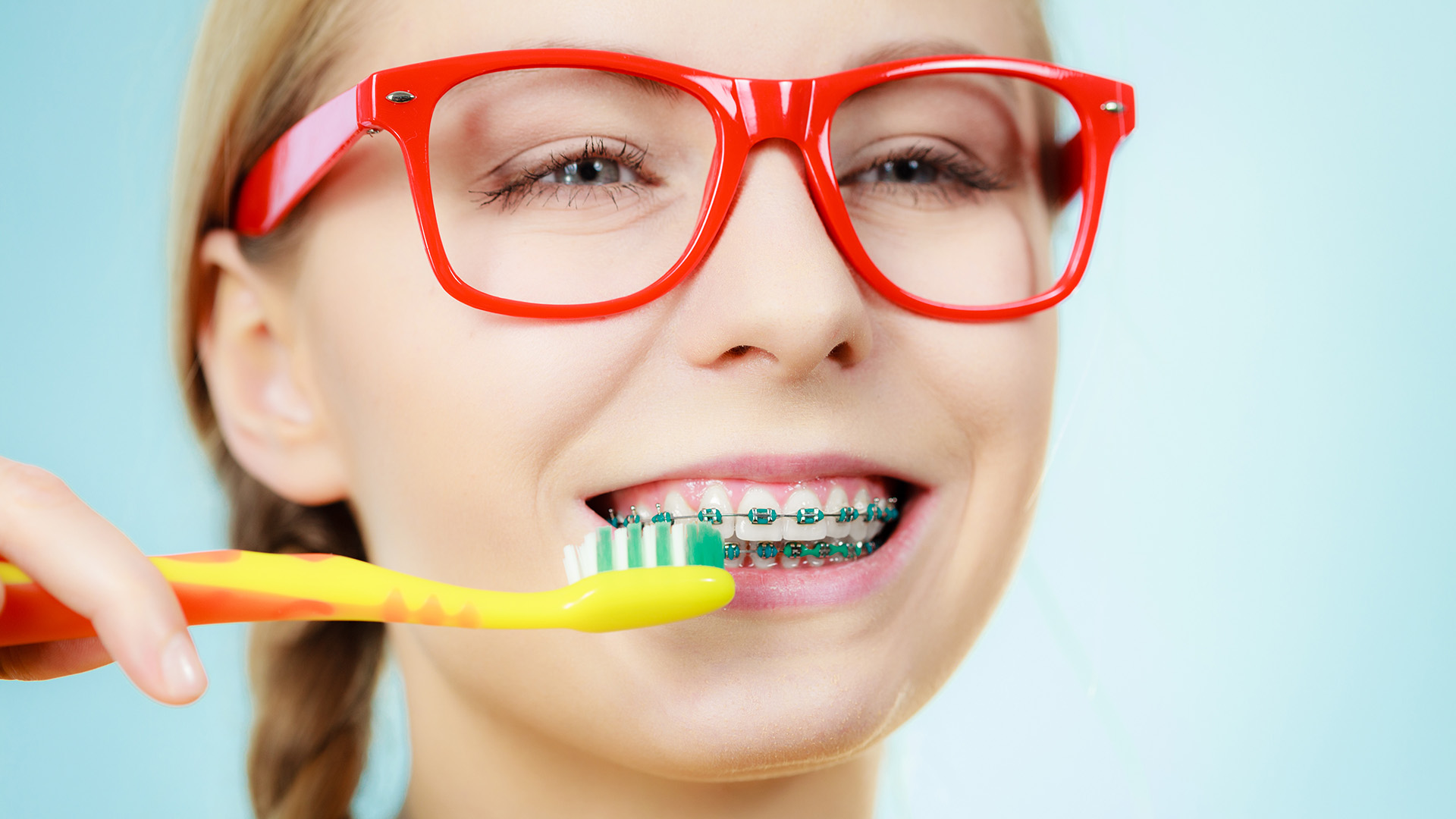
Brushing with braces takes a few added steps to keep teeth, gums, and orthodontic hardware clean and healthy. Plaque tends to collect around brackets and wires, raising the risk of cavities, staining, and gum irritation. If you’re wondering how you brush your teeth with braces, this guide outlines a practical routine, the right tools, and effective techniques so you can brush confidently and protect your smile throughout treatment. It also explains how to brush teeth properly with braces in a way that’s comfortable and thorough.
Preparing for Brushing
A brief prep routine makes brushing more effective. Clearing loose debris and identifying trouble spots before you begin helps you clean thoroughly without missing areas.
- Gather your basics: a soft-bristled toothbrush, fluoride toothpaste, floss or interdental brushes, and mouthwash. Keep a set at home and a compact kit for school, work, or travel so you can maintain your routine anywhere.
- Rinse with water for 15–30 seconds to loosen food particles. Swish vigorously to free debris around brackets and between teeth.
- Use a mirror to scan for stuck food along the gumline, around brackets, and beneath the wire. If needed, gently dislodge it with an interdental brush.
- Remove orthodontic elastics before brushing. Replace them after you finish.
- Apply a pea-sized amount of fluoride toothpaste to strengthen enamel and protect areas around brackets where plaque tends to accumulate.
These quick steps prevent you from brushing over trapped debris and improve visibility of hard-to-reach spots. Starting with this simple prep helps ensure you’re set up to brush effectively. Learning how to brush teeth properly with braces begins with preparation.
Choosing the Right Toothbrush
The right toothbrush makes it easier to clean around brackets and wires without irritating gums. Look for features that are gentle on enamel but precise enough to access tight spaces.
- Choose soft bristles. They flex around orthodontic components, remove plaque effectively, and are kinder to gums and enamel.
- Consider an orthodontic-style brush. Options with V-shaped bristles or a compact head can help reach around wires and brackets for more targeted cleaning.
- Electric or manual? Either can work well. Electric brushes provide consistent motion and are helpful if you struggle with timing; manual brushes offer fine control around sensitive areas. If you use an electric brush, select a soft head and let the brush do the work, avoid pressing hard.
- Mind the head size. A smaller head improves maneuverability around brackets and makes it easier to reach back teeth.
- Replace the brush or head every three months, or sooner if bristles splay. Worn bristles clean poorly and can be harsh on gums.
Not sure which brush fits your needs? A clinician can recommend options and show you how to use them for the best results as you learn how to brush teeth properly with braces.
Brushing Technique
Technique matters more than force. Gentle, consistent movements clean thoroughly while protecting your gums and orthodontic appliances. Use this approach for a complete, comfortable clean.
- Angle the bristles at about 45 degrees toward the gumline to lift plaque where it tends to gather most.
- Use small, circular motions. Move around each bracket and along the wire, spending a few seconds on every surface, outer, inner, and chewing surfaces. Circular strokes are more effective than back-and-forth scrubbing and reduce abrasion.
- Clean above and below the brackets separately. First, angle the bristles toward the top of the bracket to reach the upper edge and gumline. Then angle toward the bottom to clean the lower edge and the tooth surface beneath the wire.
- Keep pressure light. Pressing hard can bend wires, irritate gums, and fray bristles. Think of polishing, not scrubbing.
- Work in a pattern. Start at the upper back teeth on one side and move across the arch, then repeat on the lower teeth. A consistent path helps prevent missed spots.
- Give it time. Brush for a full two minutes, twice daily, and do a quick clean after meals when possible.
- Brush your tongue and the roof of your mouth at the end to help reduce bacteria and improve breath.
If you notice tenderness or bleeding, you may be brushing too aggressively, or you may need to focus more attention at the gumline. Mastering these gentle angles and motions is essential. Practicing how to brush teeth properly with braces ensures you reach plaque around brackets without damaging your appliances.
Cleaning Between Teeth
Brushing alone cannot reach the tight areas between teeth or under the archwire. Daily interdental cleaning removes plaque in these spaces, lowering the risk of cavities and gum inflammation while you wear braces.
- Use floss or interdental brushes every day. These tools access areas your toothbrush misses, especially around brackets and beneath wires.
- How to floss with braces: Thread floss under the archwire with a floss threader. Slide the floss gently between teeth, curve it into a C-shape against each tooth, and move it up and down along the side surfaces. Avoid snapping the floss, which can injure gums.
- Interdental brushes: Choose a size that fits snugly but comfortably. Insert the brush beneath the wire and around brackets to dislodge plaque. Rinse the brush as needed and replace it when bristles wear out.
- Water flossers: A focused water stream helps flush plaque and food debris. They’re especially useful if flossing is challenging around wires. Use a low to medium pressure and trace along the gumline and around each bracket.
- Order of steps: Many people like to clean between teeth before brushing so the toothbrush can remove loosened debris, but either order works as long as you complete both steps.
If you’re unsure which method is best for you, a clinician can demonstrate each option and help you choose the approach you’ll use consistently. When considering how you brush teeth with braces, remember that interdental cleaning is a critical companion to brushing and part of how to brush teeth properly with braces.
Post-Brushing Care
Finishing strong protects enamel and confirms you’ve reached every area. A quick post-brushing routine adds cavity protection and keeps breath fresh.
- Rinse with a fluoride mouthwash for 30–60 seconds after brushing and cleaning between teeth. Avoid eating or drinking for 30 minutes to allow fluoride to strengthen enamel.
- Inspect your results. Check in a good mirror for any remaining plaque around brackets and along the gumline. If you find missed spots, touch them up right away.
- Address irritation or sensitivity. If you feel soreness, evaluate your pressure and technique, and make adjustments to improve comfort.
- Keep removable items clean. If you’re wearing removable retainers or elastics during your current stage, follow your clinician’s cleaning instructions to prevent odors and plaque buildup.
- Maintain regular visits. Routine appointments allow adjustments, monitoring of oral health, and personalized guidance for better hygiene outcomes.
These steps reinforce your daily routine and protect the progress you’re making with braces. They’re especially helpful if you’re still figuring out how to brush your teeth with braces and want to keep enamel strong during treatment.
Maintaining a Consistent Routine
Consistency is the key to long-term success. A dependable schedule keeps plaque under control, protects enamel around brackets, and supports comfortable, efficient orthodontic treatment.
- Brush at least twice a day, and ideally after meals. If you can’t brush right away, rinse well with water and brush as soon as you can.
- Set reminders. Phone alerts or a simple checklist can prompt morning, after-lunch, and evening care. Consistency reduces staining and lowers the risk of white spots around brackets.
- Carry a travel kit. Keep a compact toothbrush, toothpaste, floss threaders, and an interdental brush in your bag so on-the-go cleaning is easy.
- Be mindful of your diet. Sticky, hard, or chewy foods can damage braces and make cleaning harder. Choose softer options and cut foods into smaller pieces to minimize trapped debris.
- Track your progress. Noting improvements, like less bleeding or fresher breath, can keep you motivated.
- Partner with your care team. Review your routine, ask for feedback, and update recommendations as your treatment progresses.
By committing to these habits, you’ll maintain excellent oral hygiene during your braces journey and set yourself up for a healthy, confident smile when your treatment is complete. If you ever wonder how you brush teeth with braces, return to these basics: soft bristles, gentle angles, thorough interdental cleaning, and consistent timing. With practice, you’ll know exactly how to brush teeth properly with braces, keeping your appliances clean and your gums comfortable throughout treatment.