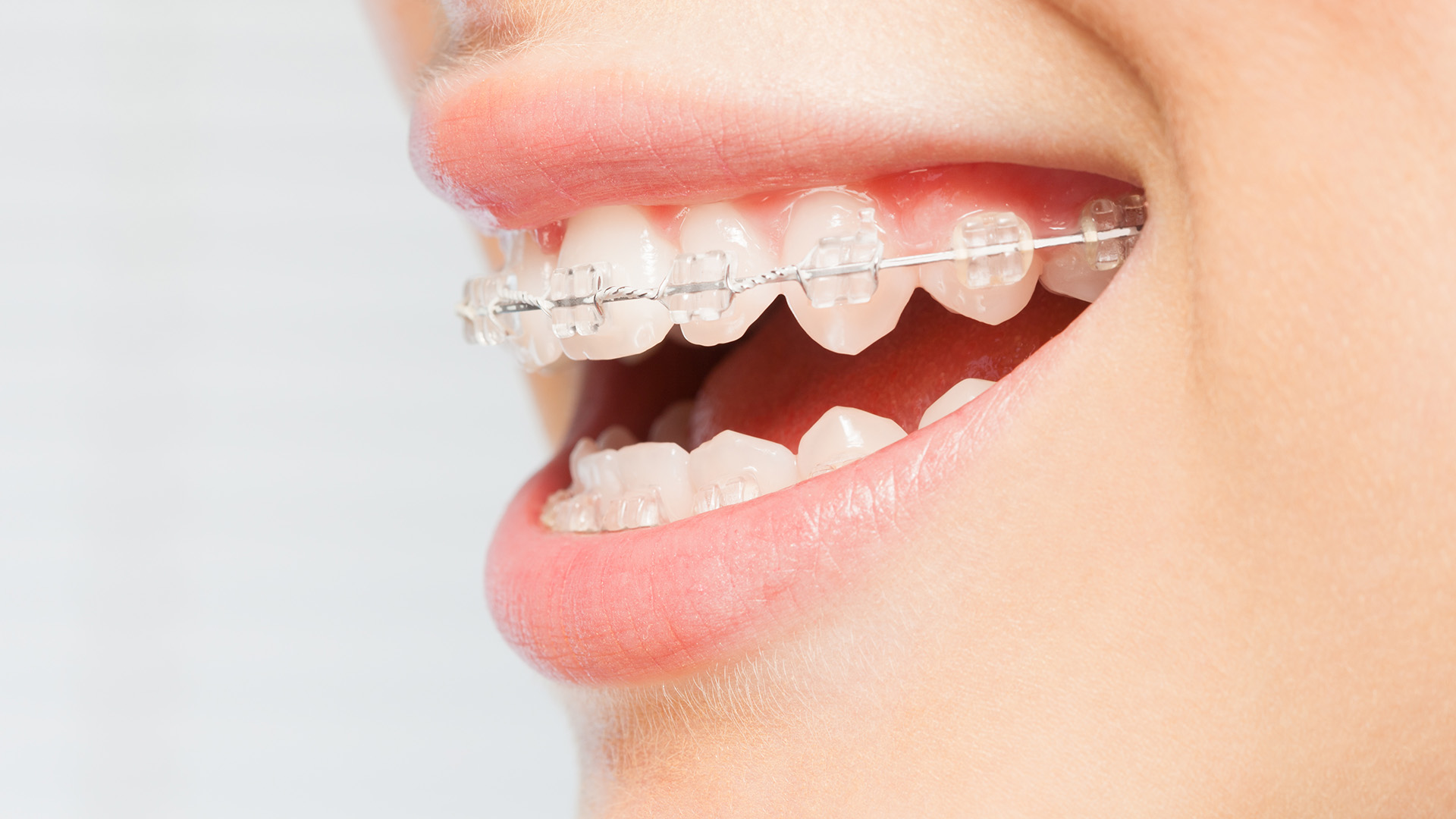
Trying to decide between ceramic braces and Invisalign? Both can straighten teeth and improve bite alignment with a more discreet look than traditional metal braces. The right choice depends on your goals, lifestyle, and the complexity of your case. Use this guide to see how each option works, what day-to-day life looks like, and how to choose confidently with your orthodontist. As you compare ceramic braces vs Invisalign, keep your priorities and habits in mind so you can match the treatment to your needs.
What to Know About Ceramic Braces
Ceramic braces are fixed appliances that use clear or tooth-colored brackets bonded to the front surfaces of your teeth. These brackets are typically made from durable ceramic materials designed to blend with your enamel. An archwire runs through the brackets to guide movement, and elastic ties can be clear or tooth-colored to keep the overall appearance subtle.
Patients often pick ceramic braces for their low-visibility look. They are far less noticeable than metal braces, making them a popular choice for teens and adults. Because they are bonded in place, there is nothing to insert or remove, which appeals to those who prefer a set-it-and-forget-it approach.
Ceramic braces work much like metal braces. Gentle, consistent forces from the archwire move teeth into planned positions over time. Your orthodontist adjusts the wires and elastics at regular visits to fine-tune tooth movement. Ceramic brackets can manage a wide range of movements, including rotations, vertical changes, and space closure, making them effective for mild through complex cases.
How Invisalign Works
Invisalign uses a series of custom, clear plastic aligners that fit snugly over your teeth. Each aligner is slightly different and applies targeted pressure to gradually shift teeth. Because the trays are transparent and trimmed near the gumline, most people will not notice them in everyday interactions.
There are several benefits to Invisalign. The aligners are smooth, with no brackets or wires to rub your cheeks or lips. They are removable, so you can eat without restrictions and brush and floss as usual. For many adults and teens, that combination of comfort, convenience, and discretion is a key advantage.
Your Invisalign process starts with a consultation and digital scan of your teeth. Using these scans, your orthodontist designs a detailed plan that maps out each stage of movement. You will receive a series of aligners and typically wear each set for one to two weeks, 20 to 22 hours per day, removing them only for meals, drinks other than water, and oral hygiene. Check-ins are usually scheduled every 6 to 10 weeks to monitor progress and provide your next sets. After active treatment, you will switch to retainers to preserve your results.
Effectiveness: Ceramic Braces vs Invisalign
Both ceramic braces and Invisalign can deliver excellent outcomes, including straighter teeth, improved bite function, and a more confident smile. Success depends on careful planning, consistent follow-through, and your orthodontist’s expertise.
Case complexity is a key factor. Ceramic braces are highly versatile and are often ideal for moderate to severe crowding, significant bite discrepancies, rotations, and vertical corrections. Invisalign addresses many mild to moderate alignment issues and, with modern planning and attachments, can also treat more involved cases. That said, certain severe misalignments or specific bite corrections may still be better managed with braces.
Both approaches allow customization. With ceramic braces, your orthodontist can use different wires, elastics, and auxiliaries to fine-tune movement. With Invisalign, digital planning stages movements precisely, and attachments, small, tooth-colored shapes placed on teeth, can improve control for rotations and root positioning. Your orthodontist will recommend the option that aligns with your goals and the movements required for your case.
Lifestyle and Daily Routine
The day-to-day experience differs between these treatments. With ceramic braces, you will need to modify your diet to avoid very hard, sticky, or crunchy foods that could loosen brackets or bend wires. Oral hygiene requires careful brushing and flossing around brackets and under the archwire. Tools like floss threaders, interdental brushes, and water flossers can make cleaning easier.
Invisalign aligners are removed for meals, so you can continue to enjoy your usual foods. You will need to brush and floss after eating and before reinserting the aligners to prevent staining and maintain oral health. Consistency is essential: wearing aligners 20 to 22 hours per day keeps treatment on track. This makes Invisalign a great fit for disciplined wearers who value flexibility, while ceramic braces suit those who want a fixed solution that does not rely on daily wear time.
Personal activities matter, too. Teens and adults who want a discreet look appreciate both options. Athletes or musicians who play wind instruments may prefer Invisalign for comfort and removability during practices or performances. Busy professionals who prefer not to think about daily wear time may lean toward ceramic braces. Your orthodontist can help match the option to your routine and responsibilities. Thinking through ceramic braces vs Invisalign with your schedule in mind can prevent surprises later.
Cost and Timeframe
Costs for ceramic braces and Invisalign are often comparable and depend on case complexity, the number of visits and appliances required, and geographic location. Ceramic braces can be slightly more expensive than metal braces because of material costs. Invisalign fees vary based on the number of aligners and whether refinements are needed. During your consultation, you will receive an individualized estimate based on your treatment plan.
Many dental insurance plans that include orthodontic benefits apply to both ceramic braces and Invisalign, though coverage details vary. A treatment coordinator can verify insurance, estimate out-of-pocket costs, and discuss flexible options, including monthly payments and financing, to help make treatment more accessible.
Typical timelines for both options range from about 12 to 24 months, depending on your orthodontic needs and how closely you follow instructions. Ceramic braces may move teeth slightly faster in some complex situations due to continuous wear and precise control. Invisalign timelines rely heavily on consistent wear; missed hours can extend treatment. Your orthodontist will outline your expected schedule and progress checkpoints from the start.
Side-by-Side Comparison
| Category | Ceramic Braces | Invisalign |
| Appearance | Clear or tooth-colored brackets for a subtle look | Transparent aligners that are barely noticeable |
| Wear | Fixed; always working | Removable; must be worn 20–22 hours/day |
| Comfort | Brackets and wires may cause minor irritation | Smooth trays with no brackets or wires |
| Diet | Avoid very hard, sticky, or crunchy foods | No food restrictions; remove aligners to eat |
| Oral hygiene | Requires careful brushing/flossing around brackets | Remove aligners to brush and floss normally |
| Case complexity | Suitable for mild to severe cases, including complex movements | Effective for mild to moderate cases; can address many complex needs with attachments |
| Compliance | Low patient compliance needed | High patient compliance required |
| Follow-up visits | Regular adjustments for wires and elastics | Periodic check-ins to deliver next aligners and track progress |
| Typical timeline | About 12–24 months, case dependent | About 12–24 months, wear-time dependent |
Choosing What Fits You Best
Before you decide, consider these questions:
- How complex is my case, and what movements are needed?
- Do I want a fixed appliance or a removable option?
- Can I commit to wearing aligners 20 to 22 hours a day if I choose Invisalign?
- Would I rather avoid food restrictions, or am I comfortable modifying my diet?
- What is my budget, and how might insurance and financing help?
- Is treatment speed or flexibility more important to me?
The most reliable next step is a comprehensive consultation. This visit typically includes a clinical exam, digital scans or impressions, photos, and X-rays if needed. Your orthodontist will assess crowding, spacing, bite relationships, and jaw alignment, then present a tailored plan for ceramic braces, Invisalign, or both. You will review projected outcomes, estimated timelines, and costs so you can make an informed choice.
Long-term success depends on retention. Whether you choose ceramic braces or Invisalign, you will need to wear retainers as directed to keep your new smile in place. Retainers may be removable, fixed, or a combination, and your orthodontist will recommend the best option for your bite. With a personalized plan and consistent follow-up, you can enjoy a healthy, confident smile for years to come. If you are weighing ceramic braces vs Invisalign, a thorough evaluation will clarify which path offers the best balance of aesthetics, efficiency, and convenience for your goals.