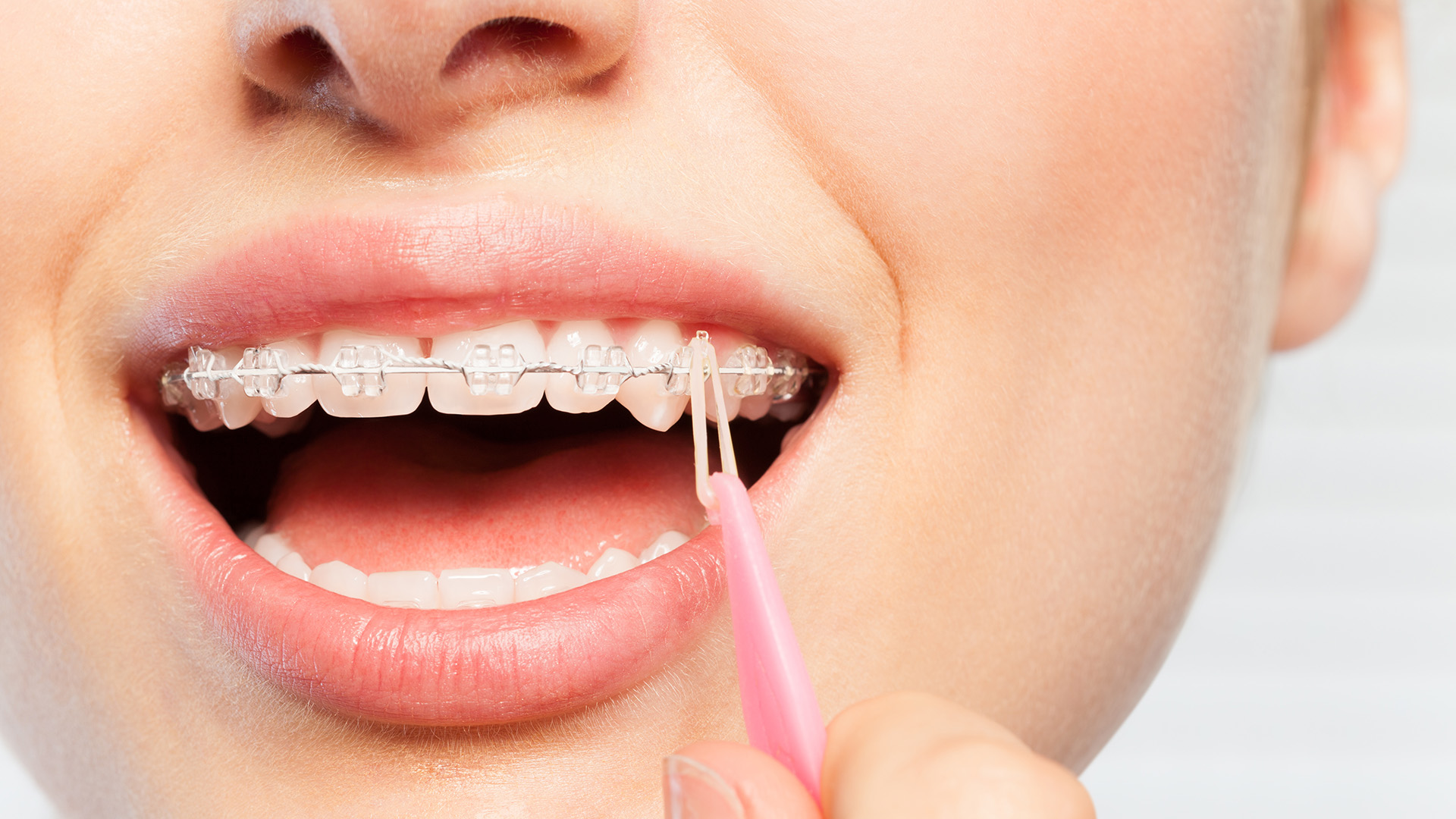
Orthodontic elastics are small rubber bands that play a big role in how braces and aligners correct your bite. When worn as directed, they guide how your upper and lower teeth fit together, helping address overbites, underbites, crossbites, and fine-tuning how teeth meet. Below, we explain how elastics work, what do elastics for braces do in everyday wear, and how to wear them for the best results, including how to put elastics on braces safely and consistently.
What Are Orthodontic Elastics?
Elastics attach to hooks on braces or to small buttons on aligners. Unlike ligatures that hold a wire to each bracket, these bands connect between your upper and lower arches to influence how your teeth and jaws relate. Their purpose is to apply gentle, continuous force that helps your bite settle into a healthier position. If you have braces with elastic bands, you will use them to coordinate the arches so they meet properly.
Different elastic patterns are used for specific goals:
- Class II elastics typically run from the upper canines to the lower molars to help reduce an overbite by coordinating the arches.
- Class III elastics often connect from the lower canines to the upper molars to guide correction of an underbite.
- Vertical elastics connect teeth straight up and down to improve the way teeth touch and to close small gaps.
- Crossbite elastics are placed diagonally to correct side-to-side mismatches.
- Triangle and box configurations connect three or four teeth to refine contact and improve stability.
Common misconceptions can lead to frustration. Wearing extra elastics will not speed treatment and may cause soreness or unwanted movement. Elastics are not optional; skipping wear slows progress or stalls it entirely. When they are worn consistently and as instructed, elastics are a safe, predictable way to finish your bite correctly and clarify what elastics do for braces in achieving those final bite details.
How Elastics Move Your Bite
Elastics move teeth by delivering light, steady tension across the teeth they connect. When a band stretches between your upper and lower arches, it pulls on the attached teeth. The bone around tooth roots remodels in response to this consistent pressure, allowing teeth to shift gradually into better alignment. This is the essence of how elastics move your bite and explains what elastics for braces do beyond aligning individual teeth.
Consistency is the key to success. The more hours per day elastics are worn, the more stable and effective the force becomes. This is why most patients are asked to wear them nearly full-time, removing them only when instructed. If you have braces with elastic bands, steady wear helps your bite settle sooner and more predictably.
Elastics help address bite issues that braces or aligners alone may not fully correct:
- Overbites: Class II elastics help coordinate the arches so the upper teeth no longer sit too far ahead of the lower teeth.
- Underbites: Class III elastics encourage a healthier overlap of the upper teeth over the lower teeth.
- Vertical discrepancies: Vertical elastics fine-tune how teeth touch, improving chewing efficiency and comfort.
- Crossbites: Diagonal elastics guide teeth that bite edge-to-edge or in reverse into a proper relationship.
Changing the configuration changes the direction and magnitude of force. Shorter, steeper angles add more vertical force for improving how teeth meet, while longer, more horizontal angles emphasize forward–backward correction between arches. Triangles and boxes spread the force across multiple teeth to refine contact points. Your orthodontist selects the size, strength, and pattern at each stage to target specific goals and demonstrate how elastics move your bite in a controlled way.
Tips for Wearing Elastics Effectively
Successful elastic wear comes down to consistency and technique. Follow your orthodontist’s instructions closely for timing, placement, and replacement. Most patients are asked to wear elastics 20 to 22 hours a day, removing them only for meals and brushing if directed. Knowing how to put elastics on braces correctly prevents breakage and keeps forces consistent.
- Replace elastics at least once or twice daily, or any time one breaks. They lose strength as they stretch.
- Keep spare packs at school, work, and in your bag or car so you are never without them.
- Use a mirror at first to learn the correct placement and follow any diagrams or photos from your orthodontic team.
- Put in fresh elastics after eating and set phone reminders to put them back in if you remove them.
Mild soreness is common when you first start or after a change in size or configuration. This usually improves within a day or two. Over-the-counter pain relievers taken as directed and a soft diet can help during that adjustment period.
Avoid habits that slow treatment. Do not double up elastics, skip days, reuse stretched bands, or change the pattern on your own. Do not switch brands or sizes without guidance. If an elastic pops off frequently, make sure it is on the correct hooks and contact the office for advice rather than improvising. Understanding what elastics do for braces can help you appreciate why exact placement matters.
Call your orthodontist if you have pain that does not improve after a few days, if brackets or attachments break, if elastics snap repeatedly, or if you run out of supplies. Reach out if you are unsure about the pattern or if your bite feels dramatically different. Timely questions keep your treatment on track and ensure braces with elastic bands are working as intended.
Elastic Types and Goals
| Elastic Type | Typical Placement | Main Purpose |
| Class II | Upper canine to lower molar | Reduce overbite; coordinate arches |
| Class III | Lower canine to upper molar | Correct underbite; improve overlap |
| Vertical | Straight up and down between arches | Improve how teeth meet; close small openings |
| Crossbite | Diagonal between upper and lower teeth | Correct side-to-side relationships |
| Triangle/Box | Connects three or four teeth | Refine contact and stability |
This summary helps clarify what do elastics for braces do for different bite concerns and serves as a quick guide for how to put elastics on braces according to the prescribed pattern.
FAQs About Orthodontic Elastics
How many hours a day should I wear elastics?
Most patients are instructed to wear elastics 20 to 22 hours per day, removing them only for meals and brushing if advised. Your specific schedule may vary based on your treatment plan and how elastics move your bite in your case.
Will wearing extra elastics speed up treatment?
No. Doubling elastics can cause soreness and unwanted tooth movement. The best way to finish on time is to wear the prescribed elastics exactly as directed, consistently.
How long will I need elastics?
Duration varies by case. Some patients wear elastics for a few months, while others may need them for most of treatment. Your orthodontist will update your plan as your bite improves.
What should I do if my elastics keep breaking or popping off?
First, confirm you are using the correct hooks and configuration. Replace the elastic and note if it happens again. If breakage is frequent, contact your orthodontist for guidance and possible adjustments.
Can I eat with elastics in?
Your orthodontist will advise you. Many patients remove elastics for meals and put in fresh ones afterward. If you leave them in, expect them to stretch and replace them after eating.
Is soreness normal when starting elastics?
Yes. Mild soreness for a day or two is common when you begin or when the pattern changes. Over-the-counter pain relievers taken as directed and a soft diet can help until it eases.
Do elastics work with clear aligners?
Yes. Small bonded buttons on certain teeth allow elastics to attach and coordinate your bite alongside aligner movements. They serve the same purpose as with braces with elastic bands.
What if I forget to wear my elastics?
Put them back in as soon as you remember and return to your normal schedule. Skipping wear slows progress. If you miss significant time, let your orthodontist know at your next visit.
Can I change brands or sizes on my own?
No. Strength and size affect the force applied. Only use the elastics provided or approved by your orthodontist to ensure safe, predictable results and to maintain the intended effect of what elastics do for braces.